


Give a brief overview of the global distribution of titanium resources.

2019-12-20


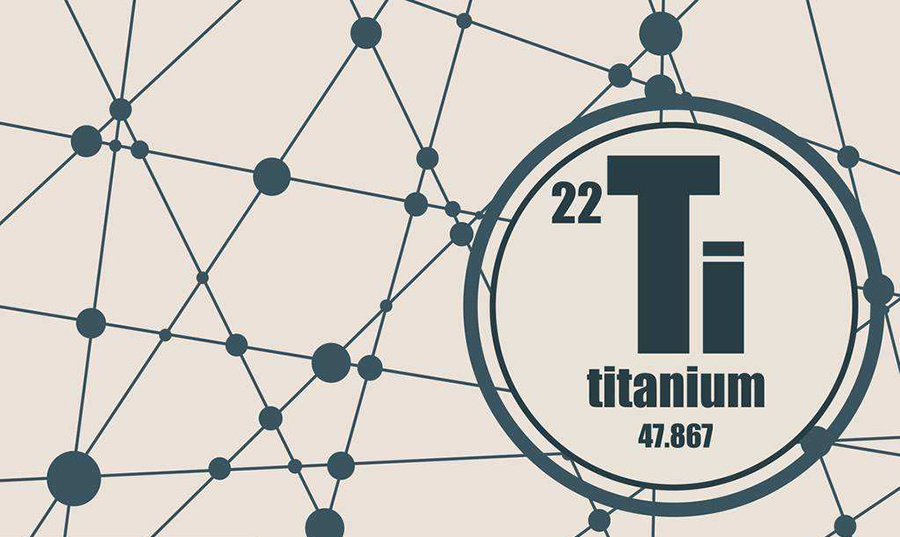
With the growing market for titanium, what is the global distribution of titanium resources? By the end of 1995, the world's ilmenite (including rutile) reserves and resource base were 33.3 million tons and 164.4 million tons respectively, with a total resource of approximately 230 million tons (TiO2 content, the same below), mainly concentrated in South Africa, India, Sri Lanka, and Australia. The world's titanium iron ore (TiO2) reserves and resource base were 274.3 million tons and 435.3 million tons respectively, with a total resource of approximately 1 billion tons; mainly concentrated in South Africa, Norway, Australia, Canada, and India. By the end of 1996, China's proven reserves of native titanium (magnetic) iron ore (in terms of TiO2) were 357.0409 million tons (including 231.915 million tons of A+B+C grade); ilmenite (sand) mineral reserves were 38.0319 million tons (including 21.4717 million tons of A+B+C grade); rutile mineral reserves were 2.5686 million tons (including 0.7373 million tons of A+B+C grade); and rutile TiO2 reserves were 7.5086 million tons (including 2.4243 million tons of A+B+C grade). If China's A+B+C grade ilmenite sand reserves of 21.4717 million tons in 1996 are converted based on a TiO2 content of 48%, the TiO2 reserves would be 10.3064 million tons, accounting for only 3.83% of the world's titanium iron ore (TiO2) reserves of 270 million tons in the same year; if this is added to the approximately 50% currently usable granular titanium iron ore output (TiO2) reserves of 115.9575 million tons from the A+B+C grade reserves (231.915 million tons) of native titanium magnetite rock ore (TiO2), the total TiO2 reserves would be 126.264 million tons, accounting for 47.76% of the world's titanium iron ore (TiO2) reserves of 270 million tons in the same year. In this sense, China can be called a country rich in titanium iron ore resources. If China's A+B+C grade rutile mineral reserves of 0.7373 million tons in 1996 are converted based on a TiO2 content of 94% into TiO2 reserves of 0.6931 million tons, and added to the A+B+C grade rutile (TiO2) reserves of 2.4243 million tons in the same year, the total would be 3.1174 million tons, accounting for 9.36% of the world's rutile (TiO2) reserves of 33.3 million tons in the same year. This shows that China's rutile resources are not abundant.

The development history of titanium

2019-12-20


Titanium has been increasingly used in modern industry. Below is a brief introduction to the development of titanium. Titanium was discovered in 1789. In 1908, Norway and the United States began producing titanium dioxide using the sulfuric acid method. In 1910, sponge titanium was produced in a laboratory using the sodium method. It wasn't until 1948 that the DuPont Company in the United States produced sponge titanium in tonnage using the magnesium method—marking the beginning of the industrial production of sponge titanium and the titanium industry. China's titanium industry started in the 1950s. In 1954, the Beijing Research Institute of Nonferrous Metals began research on sponge titanium preparation processes. In 1956, the state listed titanium as a strategic metal in its 12-year development plan. In 1958, an industrial trial of sponge titanium was achieved at the Fushun Aluminum Plant, and China's first sponge titanium production workshop was established. At the same time, China's first titanium processing material production trial workshop was established at the Shenyang Nonferrous Metals Processing Plant. During the 1960s and 1970s, under the unified planning of the state, more than 10 sponge titanium production units, represented by the Zunyi Titanium Plant, and several titanium material processing units, represented by the Baoji Nonferrous Metals Processing Plant, were successively built. A research force, represented by the Beijing Research Institute of Nonferrous Metals, was also formed, making China the fourth country after the United States, the former Soviet Union, and Japan to have a complete titanium industry system. Around 1980, China's sponge titanium production reached 2,800 tons. However, due to the lack of understanding of titanium metal by most people at the time, and the high price of titanium materials also limited the application of titanium, the output of titanium processed materials was only about 200 tons, and China's titanium industry fell into difficulty. Under these circumstances, in July 1982, under the initiative of then Vice Premier Fang Yi, with the support of Zhu Rongji and Yuan Baohua, a cross-ministerial National Titanium Application Promotion Leading Group was established to specifically coordinate the development of the titanium industry, which led to the booming production and sales of sponge titanium and titanium processed materials and the rapid and stable development of the titanium industry from the 1980s to the early 1990s. In summary, China's titanium industry has roughly gone through three development periods: the pioneering period in the 1950s, the construction period in the 1960s and 1970s, and the preliminary development period in the 1980s and 1990s. In the new century, benefiting from the sustained and rapid development of the national economy, China's titanium industry has also entered a period of rapid growth.

Briefly describe the applications of titanium

2019-12-20


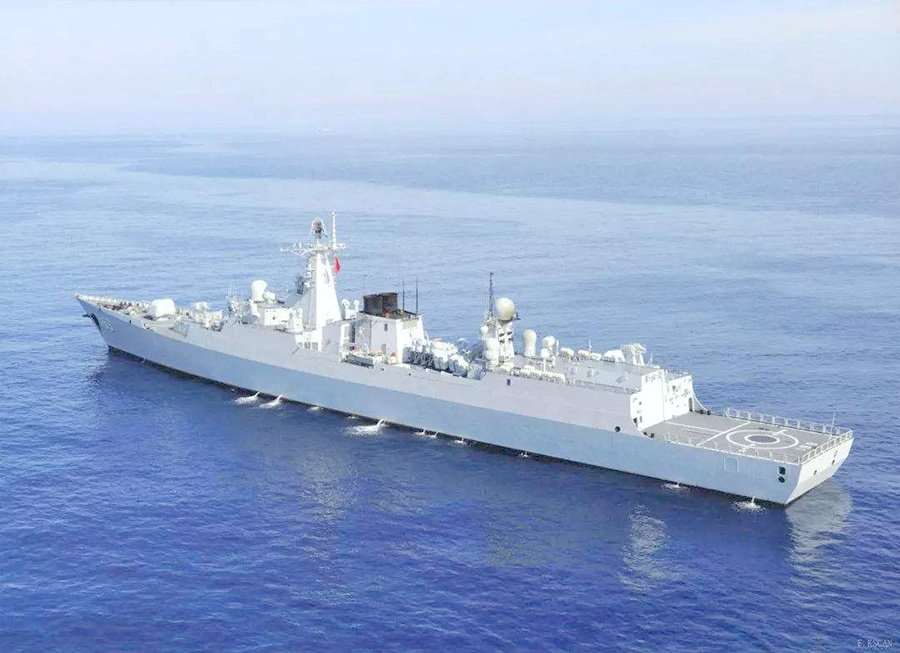
Titanium has a metallic luster and is ductile. Density 4.5 g/cm³. Melting point 1660 ± 10 ℃. Boiling point 3287 ℃. Valence +2, +3, and +4. Ionization energy is 6.82 electron volts. The main characteristics of titanium are its low density, high mechanical strength, and ease of processing. The plasticity of titanium mainly depends on its purity. The purer the titanium, the greater the plasticity. It has good corrosion resistance and is not affected by the atmosphere and seawater. At room temperature, it will not be corroded by dilute hydrochloric acid, dilute sulfuric acid, nitric acid, or dilute alkaline solutions; only hydrofluoric acid, hot concentrated hydrochloric acid, concentrated sulfuric acid, etc. can act on it. In the petroleum industry, it is mainly used for various containers, reactors, heat exchangers, distillation columns, pipelines, pumps, and valves. Titanium can be used as electrodes and condensers in power plants, as well as environmental pollution control devices. Titanium nickel shape memory alloy has been widely used in instrumentation. In medicine, titanium can be used as artificial bones and various instruments. Titanium is also a deoxidizer for steelmaking and stainless steel, and titanium carbide (hydride) is a new type of cemented carbide material. Titanium nitride is close to gold in color and is widely used in decoration. Titanium and titanium alloys are widely used in the aerospace industry and are known as "space metal"; in addition, they are increasingly widely used in shipbuilding, chemical industry, manufacturing machinery parts, telecommunications equipment, cemented carbide, etc. In addition, because titanium alloys also have good compatibility with the human body, titanium alloys can also be used as artificial bones.

< 1 > proceed page